
How Data Consolidation Transforms Risk Management with UNITY Data Platform

Risk management breaks down when the data behind it cannot be trusted, compared, or seen in one place. For insurers, brokers, third-party administrators, and enterprise risk teams, that problem often starts with a familiar pattern: claims data in one system, policy data in another, carrier files in separate formats, and loss runs arriving on different schedules.
The result is more than an IT inconvenience. Disconnected data affects reserving, claim reviews, carrier negotiations, executive reporting, and the ability to understand Total Cost of Risk (TCOR). When teams cannot see the full operational picture, they spend valuable time reconciling reports instead of managing risk.
ASG Insurance Operations Intelligence addresses that challenge through data consolidation. UNITY Data Platform brings claims, policy, carrier, and operational data together into a single version of operational truth. INFINITY RMIS then turns that trusted data layer into scalable risk management workflows and real-time executive dashboards.

Why fragmented insurance data creates operational risk
Insurance operations depend on data from many parties. A single program may include multiple carriers, brokers, TPAs, internal claim teams, safety systems, payroll feeds, policy systems, and finance platforms. Each source has its own naming conventions, file structures, coding practices, and reporting cadence.
That complexity creates a layer of risk before the actual risk analysis even begins.
Legacy systems slow decision-making
Many organizations still rely on core systems built for transaction processing, not enterprise reporting. Those systems may perform well within their original purpose, but they often struggle to support modern risk management needs.
Common issues include:
Limited API access
Inconsistent field definitions
Manual spreadsheet exports
Batch reporting delays
Duplicate claim records
Incomplete historical data
Difficulty connecting policy and claim activity
These issues force risk teams to build workarounds. A claims analyst may reconcile loss runs by hand. A risk manager may wait days for a refreshed report. A CTO may support custom feeds that grow fragile over time. Each workaround adds cost and reduces confidence.
Claims databases rarely tell the full story
Claims data is critical, but it is only one part of risk performance. A claim record may show payment activity, reserves, litigated status, or cause of loss. It may not show the related policy terms, deductible structure, location hierarchy, payroll exposure, carrier layer, or business unit ownership.
Without that context, teams can miss important patterns. For example, a rising claim count in one region may look like a claims handling issue. When combined with policy, exposure, and operational data, it may point to a safety program gap, a vendor issue, or a shift in workforce activity.
Data consolidation gives that context back to the business.
UNITY Data Platform creates a single version of operational truth
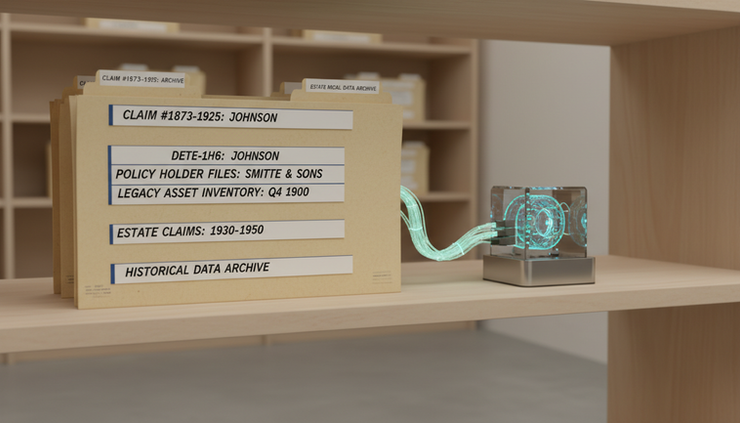
UNITY Data Platform is designed to aggregate disparate insurance data into one governed, consistent source. It collects claims, policy, carrier, and operational feeds from many systems, then standardizes and aligns them so the organization can report from one trusted data foundation.
This is the core of a Single Version of Operational Truth. It means teams no longer debate which spreadsheet is correct or which system has the latest file. They work from a shared data layer built for insurance operations.
How UNITY brings the data together
UNITY is built for the real conditions of insurance data. It does not assume every source is clean, modern, or formatted the same way. Instead, it supports ingestion from varied sources and prepares that information for consistent reporting and analysis.
Here is a simplified view of the data flow:
```text
[Legacy Claims Systems] [Policy Admin Systems] [Carrier Feeds]
| | |
v v v
[TPA Loss Runs] [Broker Data] [Exposure Files]
| | |
+------------+-------------+------------+------------+
|
v
[UNITY Data Platform]
|
+--------------+--------------+
| |
v v
[Data Standardization] [Validation and Matching]
| |
+--------------+--------------+
|
v
[Single Version of Operational Truth]
|
+--------+--------+
| |
v v
[INFINITY RMIS] [Executive Dashboards]
```
This structure matters because risk management depends on data lineage, consistency, and repeatability. Once the organization has a governed data layer, every report, dashboard, and analysis can draw from the same source.
A governed data foundation reduces manual reconciliation
Manual reconciliation creates hidden operational cost. Teams spend hours comparing claim counts, checking payment totals, and confirming whether a report includes open claims, closed claims, reopened claims, or claims from a specific valuation date.
UNITY reduces that friction by applying consistent rules across incoming data. That includes mapping fields, aligning hierarchies, matching records, and supporting data validation practices. The result is a data foundation that business users and technical teams can both trust.
Operational control begins when every team can act from the same truth, at the same time, with the same confidence.
INFINITY RMIS turns consolidated data into risk management value
Data consolidation is the foundation. Risk management value comes from how that data is used.
INFINITY RMIS builds on the UNITY Data Platform to support scalable risk management workflows, reporting, and executive visibility. It gives risk leaders the tools to monitor performance, identify trends, and communicate risk outcomes across the organization.
Real-time dashboards support faster executive decisions
Executive teams need clear answers, not fragmented reports. They need to know where losses are rising, how reserves are developing, which programs are affecting TCOR, and where operational action may reduce future cost.
INFINITY RMIS supports real-time executive dashboards that surface key risk indicators in a clear, usable format. Instead of waiting for static reports, leaders can track claim trends, exposure changes, financial impact, and program performance as data becomes available.
Dashboards can support views such as:
Total incurred by business unit, location, or coverage
Open claim inventory and aging
Reserve development trends
Litigation frequency
Large-loss activity
Carrier and TPA performance
Policy period comparisons
TCOR by program, region, or operating group
This level of visibility supports better timing. Leaders can respond while issues are still manageable, not after annual reviews or renewal cycles expose the problem.
Scalable workflows help risk teams manage complexity
Large risk programs grow complex quickly. More entities, more locations, more carriers, and more claim handlers create more data movement. Without a scalable system, that complexity turns into missed follow-ups and inconsistent reporting.
INFINITY RMIS supports risk teams by connecting data with workflows. Teams can monitor claims, track tasks, manage reporting needs, and maintain visibility across the risk program without relying on disconnected spreadsheets.
That matters for insurers, TPAs, brokers, and enterprise risk managers alike. Each group needs confidence that the data supports both daily operations and strategic decisions.

The business impact of insurance data consolidation
Insurance data consolidation is not just a technology project. It changes how risk work gets done. When claims, policy, carrier, and exposure data connect, teams gain a clearer view of performance and can manage risk with more discipline.
Key benefits of UNITY and INFINITY together
Stronger data confidence
Teams work from a shared source instead of competing exports and manual adjustments.
Better TCOR visibility
Risk leaders can connect losses, premiums, deductibles, retained losses, claims handling costs, and exposure data for a fuller view of cost.
Faster reporting cycles
Standardized data reduces the time spent assembling recurring reports.
Improved carrier and TPA oversight
Program managers can compare performance across partners with consistent metrics.
Clearer executive communication
Dashboards help translate complex claim and policy activity into decision-ready views.
More consistent compliance and governance
Defined data rules support repeatable reporting and reduce ad hoc handling.
Scalable risk operations
The platform can support growth across entities, programs, regions, and carriers without multiplying manual work.
Better strategic planning
Consolidated history helps teams spot trends, evaluate risk controls, and prepare for renewals with stronger evidence.
What changes when teams stop managing risk from silos
A siloed data environment often creates a reactive operating model. Teams answer questions one report at a time. They investigate discrepancies after meetings. They rely on institutional knowledge to explain what the numbers mean.
A consolidated data environment supports a more controlled model. Questions can be answered faster. Data definitions are clearer. Reports are easier to repeat. The organization can focus on risk outcomes rather than data assembly.
Before and after data consolidation
Before consolidation | After consolidation |
Reports vary by source and timing | Reports draw from one governed data layer |
Claim and policy data require manual matching | Related data can be connected through standard rules |
Leaders wait for static reporting cycles | Dashboards refresh as data becomes available |
Teams debate data accuracy | Teams focus on performance and risk action |
TCOR analysis is fragmented | TCOR can be viewed across programs and entities |
This shift does not remove the need for expertise. It gives experts better tools. Claims leaders, risk managers, actuaries, finance teams, and technology leaders can spend more time interpreting results and less time cleaning the inputs.
Why CTOs and risk leaders need the same data strategy
Risk management data is both a business issue and a technology issue. CTOs care about system architecture, governance, integrations, security, and scale. Risk leaders care about claims outcomes, program cost, carrier performance, and executive reporting.
UNITY Data Platform creates common ground between those needs. It supports the technical requirement for organized data movement and the business requirement for reliable operational visibility. INFINITY RMIS extends that value by giving users a practical environment for risk reporting, monitoring, and management.
That shared foundation is essential for modern Risk Management Information Systems. A RMIS cannot deliver meaningful reporting if the data beneath it remains fragmented. The platform must support both the integrity of the data and the decisions that depend on it.

Build risk management on trusted data
Data consolidation changes the pace and quality of risk management. It helps insurers, brokers, TPAs, and enterprise risk teams move from fragmented reporting to operational control. It connects claims, policy, carrier, and exposure data into a single version of operational truth, then turns that truth into real-time dashboards and scalable workflows.
UNITY Data Platform provides the trusted data foundation. INFINITY RMIS turns that foundation into practical risk management capability.
To see how ASG Insurance Operations Intelligence can help consolidate insurance data, improve TCOR visibility, and support executive decision-making, request a UNITY Data Platform and INFINITY RMIS demo.


Comments